


★★★★★ 200+ 5 Star Reviews
Holiday Lighting · Indianapolis
Holiday Lighting in Indianapolis: The Complete Homeowner’s Guide
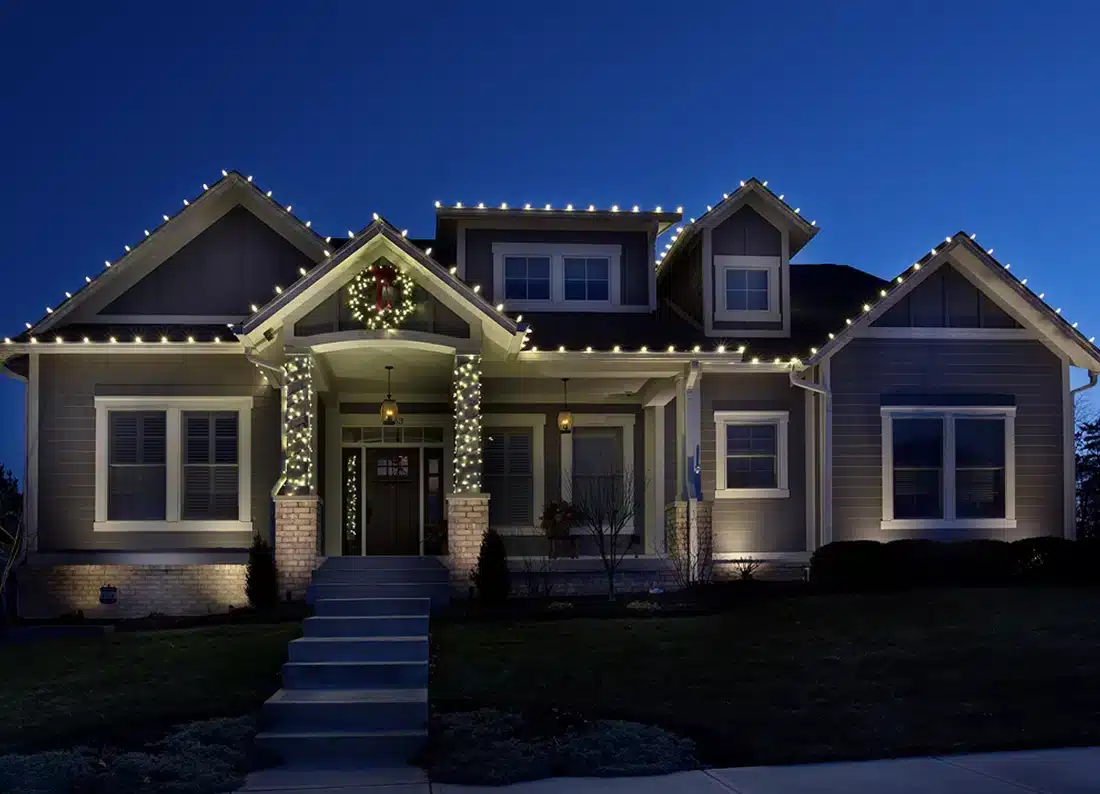
Great holiday lighting comes down to four things — a clear design, the right materials, safe power, and a little restraint. Decide what to light and the color, install in mild fall weather before the deep cold, size the display to your home’s circuits, and you get a result that looks finished instead of frantic.
From Carmel, Zionsville, Fishers, and Westfield to Indianapolis and the south side, this guide walks homeowners through every decision from the first sketch to takedown in January.
Start Here
The Three Essential Holiday Lighting Guides
Use these guides to plan the display, decide what to handle yourself, and protect the system through takedown and storage.
01
Planning Your Holiday Lighting
Four deliberate decisions — what to light, color and style, timing, and safe power — make the display feel designed from the start.
02
Professional Installation vs. DIY
Compare the real trade-offs in time, ladder safety, electrical load, materials, maintenance, takedown, and storage.
03
Maintenance, Takedown & Storage
Keep the display looking like day one, remove it before late-winter weather, and store it tested, labeled, and dry.
01 · Design
What Makes a Holiday Display Look “Finished”
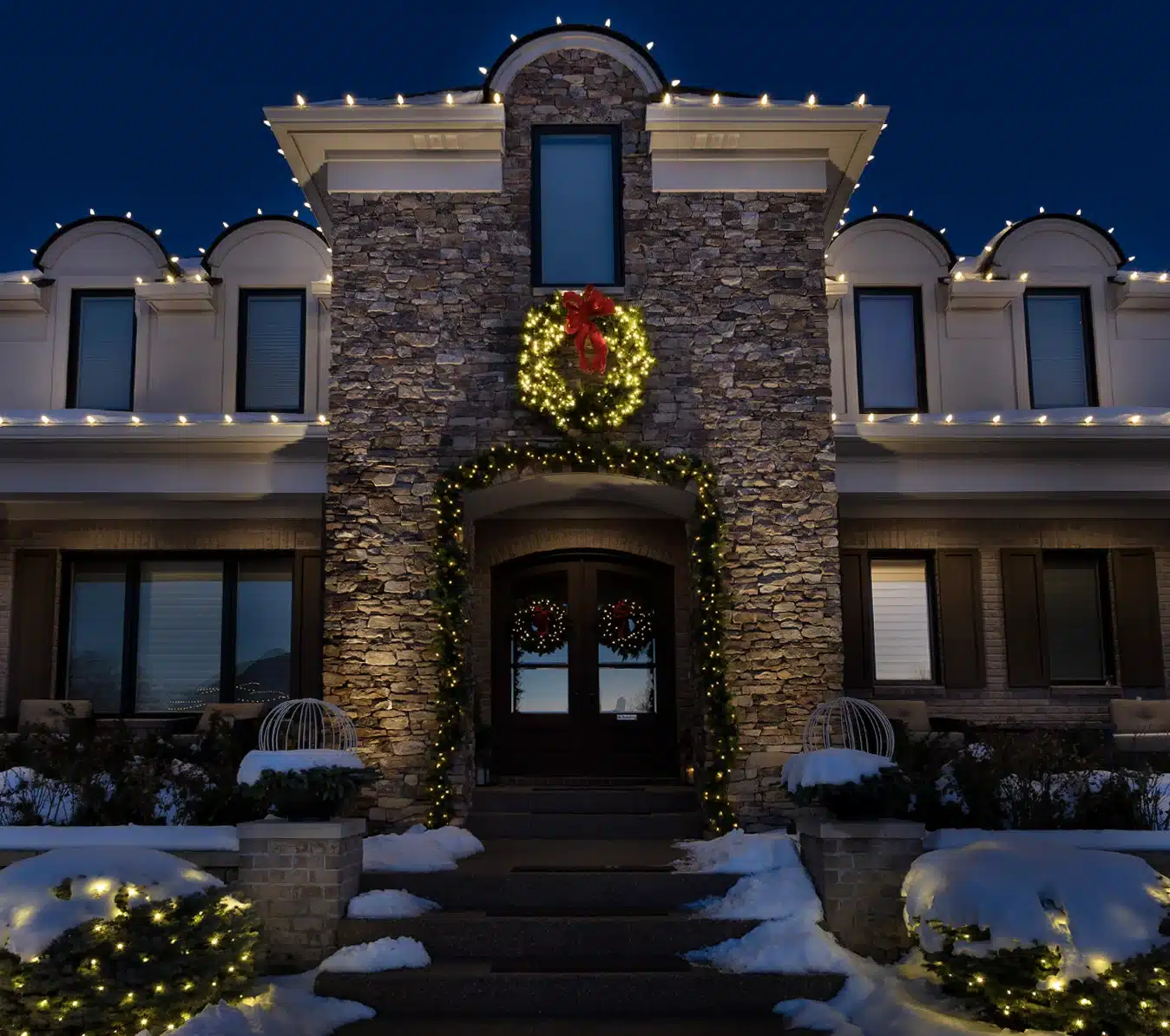
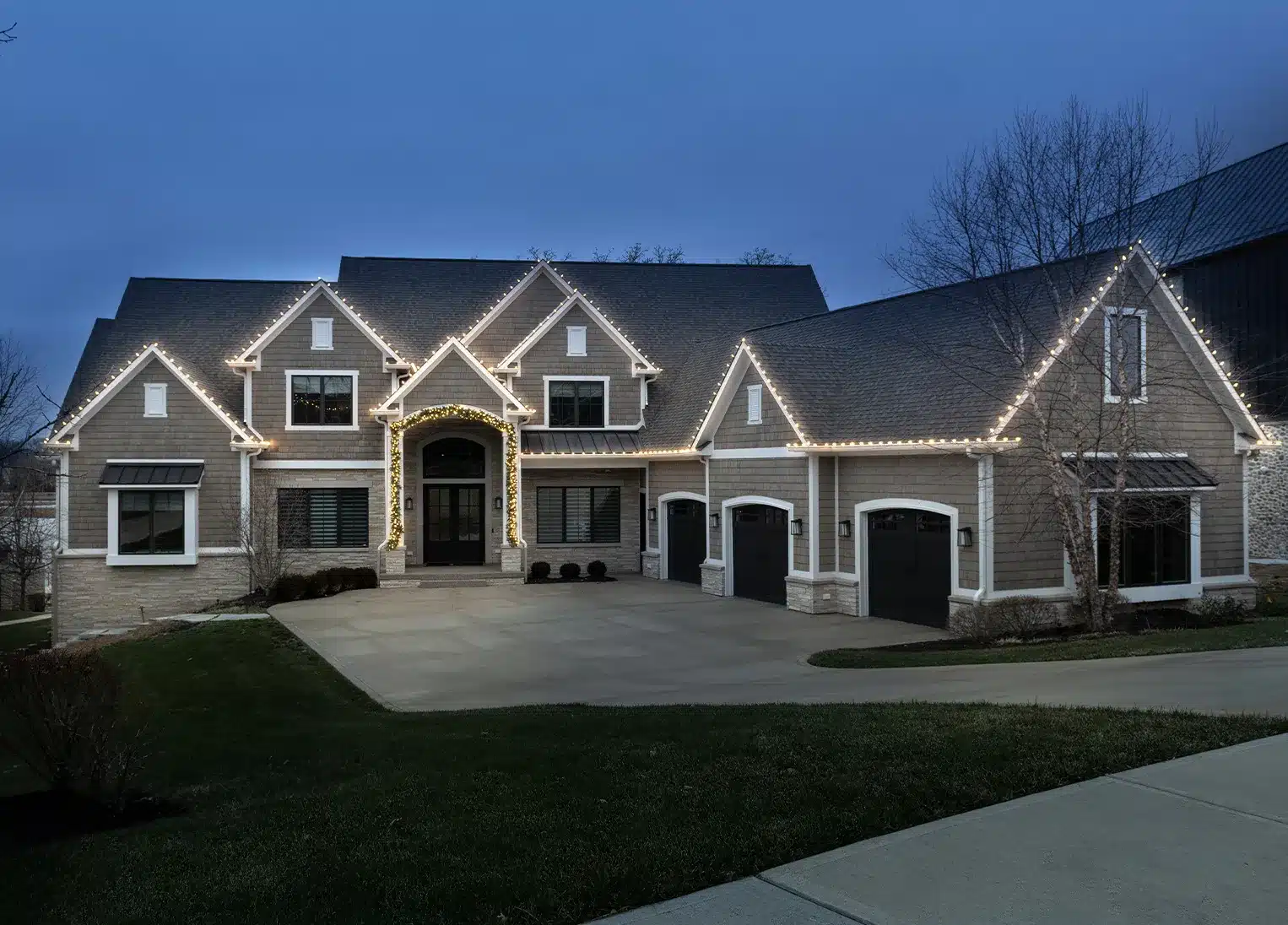
The displays that look effortless almost always share three qualities. The first is clean, even lines: lights spaced consistently and cut to length so they follow the architecture instead of bunching at corners or sagging between clips.
The second is a single, consistent color temperature, so the home reads as one intentional look rather than a patchwork assembled from purchases made in different years.
The third is a plan that ties the house, trees, and entry together — leading the eye through the composition instead of lighting everything at once and hoping it works.
02 · Building Blocks
What to Light
Most residential displays are built from a small set of elements. The best ones choose a few and execute them cleanly rather than trying to use all of them at once.
Rooflines
The backbone of the display. Even spacing, custom-cut lengths, and the right clips make the architecture read clearly.
Trees & Landscape
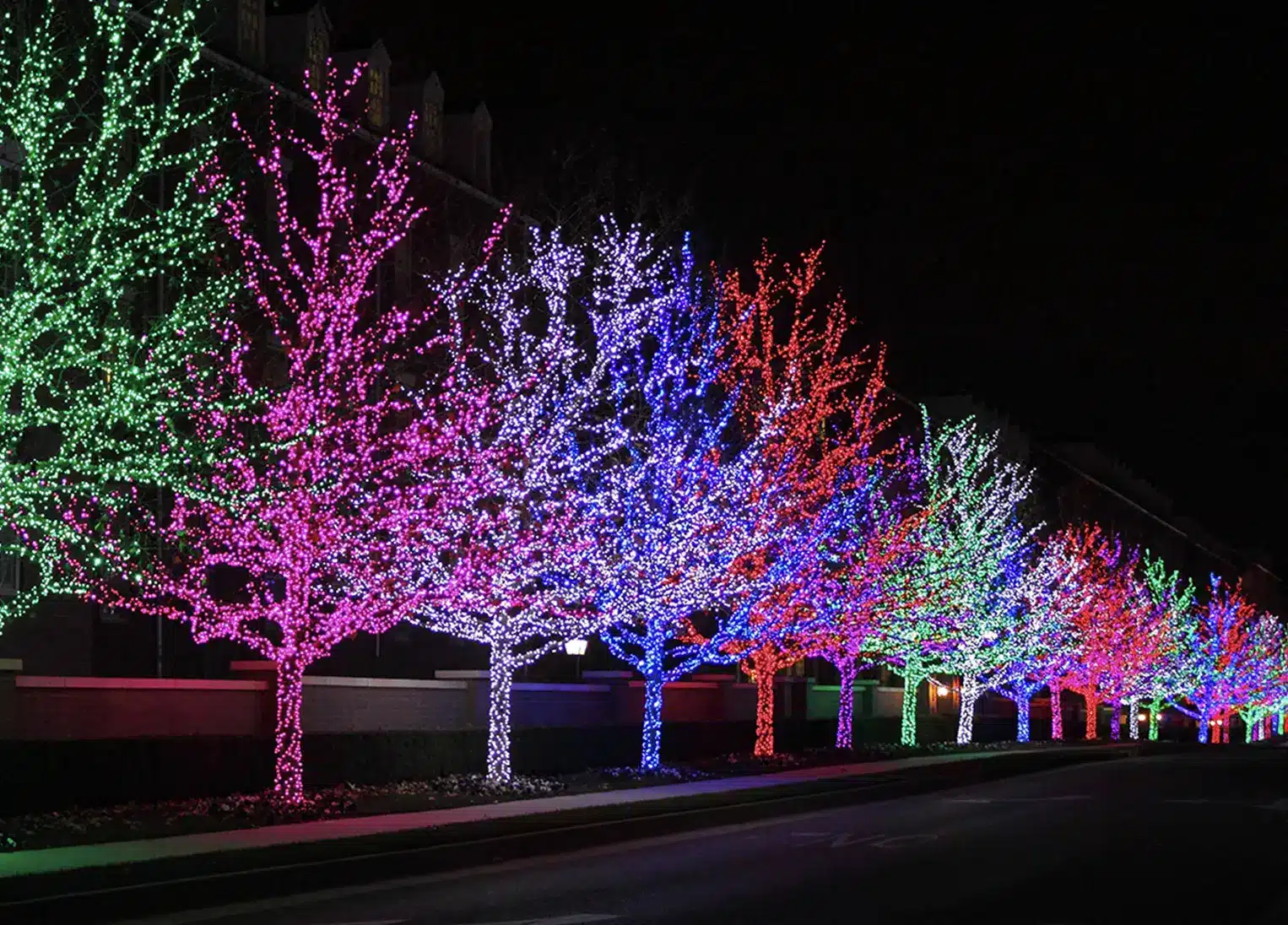
A wrapped trunk feels architectural; lit branches or a softly illuminated canopy add depth and dimension.
The Entry
A warmly lit door, garland, or flanking elements create a welcoming arrival and deliver outsized visual impact.
Walkways & Accents
Path markers guide the approach. Wreaths, bows, and garland work best as finishing touches used sparingly.
03 · Color & Style
Choose One Look and Carry It Through
Warm white feels classic, cozy, and timeless and flatters brick and stone. It is the safe, elegant default when you are not sure.
Cool white feels crisp, bright, and modern and stands out against a dark winter sky.
Color is playful and family-friendly and works beautifully when used with intent — for example, as a single accent color or reserved for one feature tree.
The most common mistake is mixing all three across one display. Quality commercial-grade LEDs also hold a more consistent tone across an entire run than a mix of store kits purchased in different years.
Indianapolis Timeline
When to Start
Plan and book in early fall, install while the weather is mild, switch on after Thanksgiving, and remove the display in January. Installation happens weeks before you actually turn the lights on.
September
Plan and book
October
Design and install
November
Install and test
Thanksgiving
Switch on
December
Enjoy and maintain
January
Takedown and store
05 · Professional vs. DIY
Time, Safety, and the Finished Result
A modest, ground-level display with easy access to power is very doable yourself. The calculus changes once steep rooflines, second stories, tall trees, or real electrical load are involved.
A full professional service is more than hanging lights for an afternoon. It includes design tailored to the home, commercial-grade outdoor-rated products, installation sized to your circuits, in-season maintenance, takedown in January, and storage until next year.
DIY Makes Sense When…
- The display stays at ground level.
- Power access is straightforward.
- You enjoy the planning and installation.
- You can use outdoor-rated products, GFCI protection, and safe ladder practices.
Professional Service Is Worth It When…
- Rooflines, second stories, or tall trees are involved.
- The display places a meaningful load on exterior circuits.
- You want custom-cut lines and consistent commercial-grade products.
- You want maintenance, removal, and storage handled.
06 · Power & Safety
The Part Most DIY Guides Gloss Over
A real display draws real power. Lights need to be sized to your home’s circuits rather than run from one outdoor outlet through a daisy chain of extension cords.
Use only outdoor-rated products and GFCI-protected outlets, keep connections off the ground and away from standing water, and put the display on timers.
Hiring a licensed electrical company makes a meaningful difference. If a larger display needs another exterior outlet or dedicated circuit, that work can be completed safely and to code before the season.
07 · Product Quality
Commercial-Grade vs. Store Kits
Commercial-grade lighting uses sturdier wiring, weatherproof connectors, and products rated for more hours and rougher conditions. It is designed to be installed, removed, stored, and reused across seasons.
LED products draw a small fraction of the power used by older incandescent strings, which matters when sizing a larger display to your circuits. Better products also hold a more consistent color tone across the whole home.
Protect the Display
Through the Season and Into Next Year
A holiday display is a system, not a one-time install. Maintenance, careful removal, and proper storage are what protect the investment.
08
In-Season Maintenance
Wind, ice, and freeze-thaw cycles can shift fixtures or take out a section. A mid-season check restores the display without anyone climbing a ladder in December.
09
Takedown
January is the usual window — after the season winds down but before lights spend weeks weathering through late winter. Dry, mild conditions are safer for removal.
10
Storage
Test each string, coil loosely or use reels, label every set by zone, and keep everything dry in sealed bins away from temperature extremes.
Choosing a Partner
How to Choose a Holiday Lighting Company
The holiday-lighting field includes everyone from licensed professionals to seasonal subcontractors with a ladder and a truck. Look for a company that:
- Is licensed and insured.
- Designs to your specific home rather than installing a one-size kit.
- Uses commercial-grade, outdoor-rated products.
- Sizes the display to your circuits.
- Includes maintenance, takedown, and storage.
Ask who fixes a failed section in December, who removes the display, and who stores the lights in the off-season. Clear answers tell you who you are dealing with.
How Gleam Approaches Holiday Lighting
Gleam designs, installs, maintains, removes, and stores holiday lighting — a genuinely full-service approach. Because Gleam is an electrical and lighting company, the power side is handled by people who work with electrical systems year-round.
The approach is education-first and no-pressure: understand the options, the reason behind the design, and how the complete system will work before installation begins.
Design · Install · Maintain · Remove · Store
Trusted, Year-Round Lighting Professionals
Holiday lighting is not a side service for Gleam. The same team understands design, installation quality, electrical safety, and long-term service.
★★★★★
200+ Five-Star Reviews
Consistent top ratings from homeowners and businesses.
★★★★★
Licensed & Insured
Electrical professionals licensed in Indiana, Ohio, and Florida.
★★★★★
Award-Winning Design
A lighting-first approach built around your home’s architecture.
Questions Homeowners Ask
Frequently Asked Questions
Clear answers to the questions that come up most often when planning a holiday display.
How much does professional holiday lighting cost in Indianapolis?
Cost depends on the size of your home, the elements you light, the products used, and whether the service includes design, maintenance, takedown, and storage. A short design conversation produces a real quote instead of a guess.
When should I book holiday lighting installation?
Early fall — September into October — is ideal in Indianapolis. Designs take time and the best installation dates fill as the season approaches.
Are LED holiday lights better than incandescent?
For most homeowners, yes. LEDs draw far less power, run cooler, and last longer, which matters when sizing and maintaining a larger display.
Is professional holiday lighting safe for my roof and gutters?
Done correctly, yes. Professional installers use clips designed for rooflines and gutters rather than staples or nails and size the electrical load to the home’s circuits.
Do you take the lights down and store them?
A full-service plan includes takedown in January and off-season storage so the lights are protected and ready to reinstall next year. Confirm this is included when comparing companies.
Can my home’s wiring handle a big display?
Often yes, but it depends on your circuits and how the load is distributed. A licensed electrician can confirm whether exterior circuits are ready and add safe GFCI-protected exterior power if needed.
What color holiday lights should I choose?
Warm white is the classic, safe default; cool white is crisp and modern; color is best used with intent. The key is to commit to one look across the whole display.
Design a Display You’re Proud of — Without the Ladder
Tell us a little about your property and what you have in mind. Our team will review your project, explain your options, and follow up with the next steps.
Request a Holiday Lighting Quote
"*" indicates required fields